AI workflows
How to Use AI to Improve Website Feedback Without Losing the Original Intent
A practical guide to using AI to turn vague website comments into clear briefs while preserving reviewer intent, assumptions, and human decision-making.
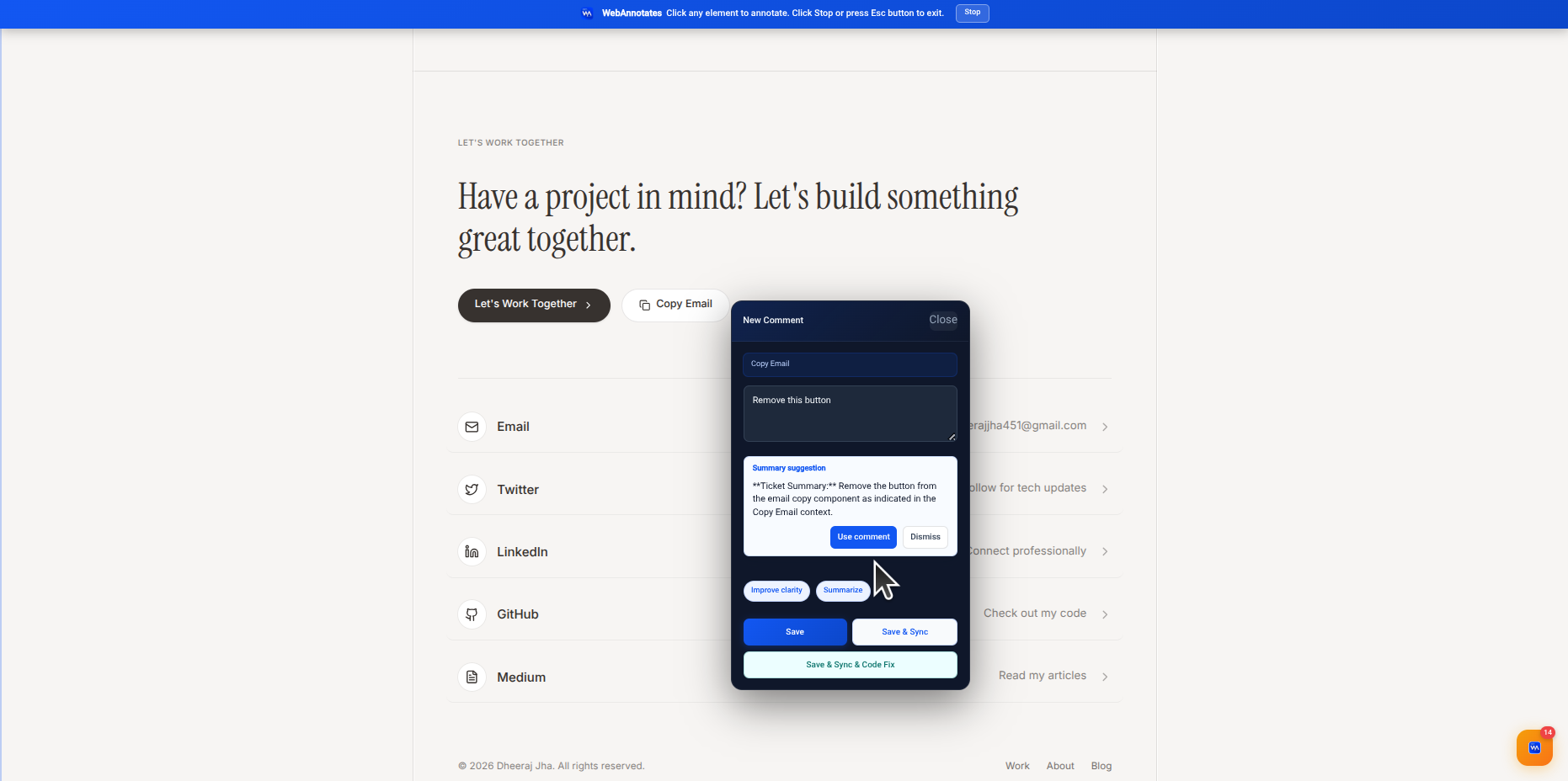
AI is most helpful in a feedback workflow when it reduces ambiguity, not when it invents authority. The purpose of enhancement is to make a reviewer’s intent clearer for the next person, while keeping the original note and the human decision visible.
Treat AI as an editor of clarity
A raw note can include an observation, a preference, a question, and an unfinished idea all at once. AI can separate those parts into a short, readable brief. It can identify the likely target, restate the user-facing problem, and suggest a review check.
The output should be framed as a working brief, not a command that bypasses product or engineering judgment. Clear language creates space for better decisions; it does not eliminate decisions.
Keep the source note beside the improved version
An enhanced request is easier to hand off when the original feedback is still available. That allows an owner to see nuance that a summary may have compressed, compare interpretations, and correct an assumption before implementation begins.
This is an important safeguard for client feedback and subjective design reviews. The literal wording may not be the final brief, but it often contains intent worth preserving.
Ask for outcomes, constraints, and open questions
The strongest AI-assisted brief names the intended outcome and any constraints that are already known. It should also surface what remains undecided. For example, a request may be clear about improving CTA prominence but still require a design choice about layout, copy, or experiment scope.
Making open questions visible prevents false precision. It gives the right person a chance to decide before work is assigned to a developer or coding agent.
Review the brief before syncing it
A quick human read is usually enough to ensure an enhanced brief says what the reviewer meant. Check that the element is correct, the desired outcome is not overstated, and the acceptance check is observable. Then sync the task to Jira or Notion with confidence.
This small checkpoint is faster than correcting an entire implementation based on a misunderstood summary.
Put the workflow into practice
Keep website feedback connected to the work it creates.
Capture context on the live page, create a clear brief, sync the task, assign the right provider, and keep a human in the review loop.
Start with WebAnnotatesQuestions
Frequently asked questions
Can AI replace a product manager or reviewer?
No. AI can organise and clarify feedback, but people still decide scope, priority, implementation trade-offs, and release approval.
What should AI not do in a feedback brief?
It should not invent product requirements, claim an implementation is correct without review, or hide uncertainty that needs a human decision.