Engineering
From Website Annotation to Pull Request: A Safer AI Implementation Path
Understand a responsible path from visual website feedback to an AI-assisted code change, human review, and a pull request or hosted release.
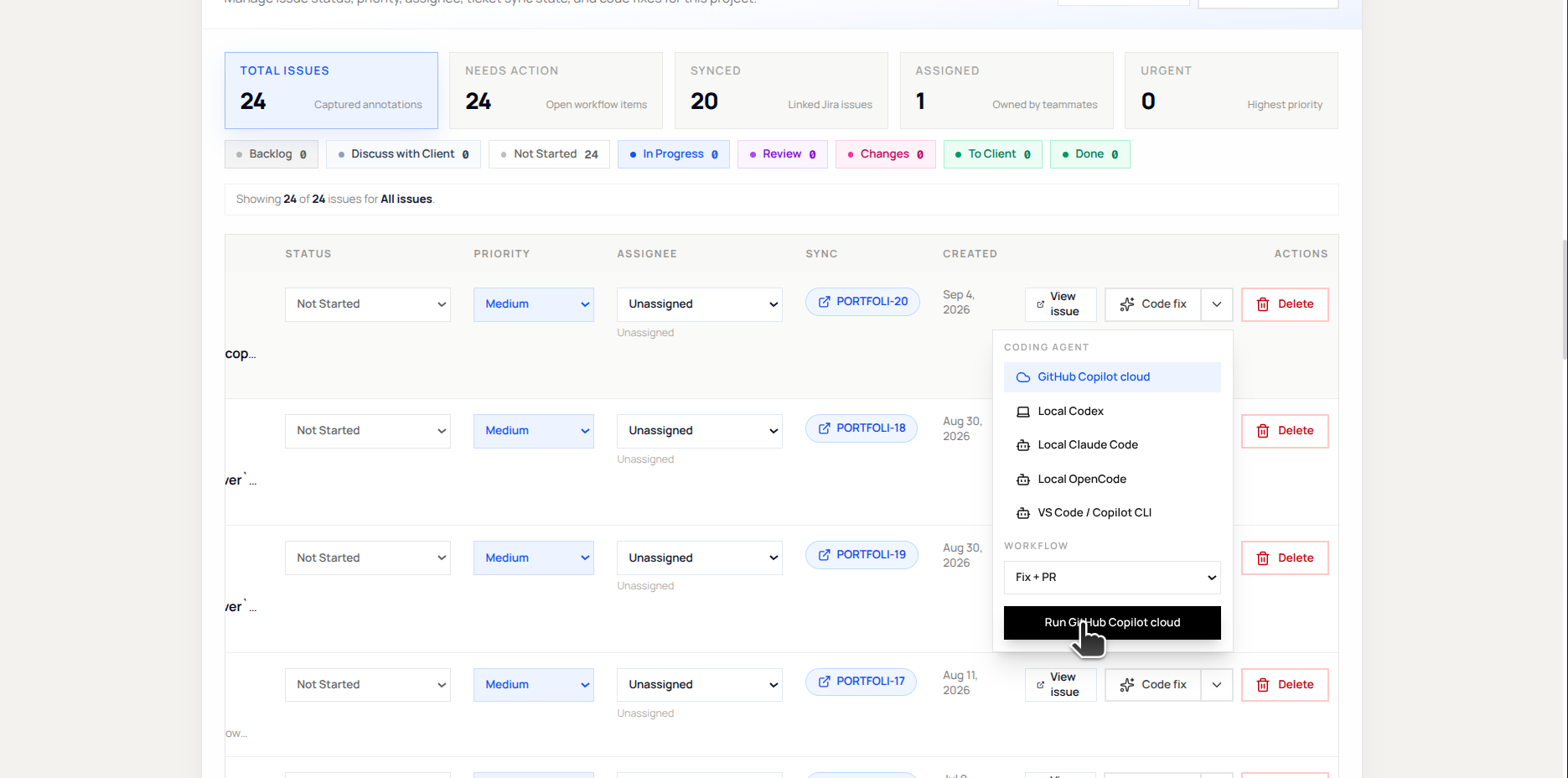
The phrase “AI code fix” can make a workflow sound automatic from end to end. In practice, reliable implementation needs a deliberate chain: clear feedback, a scoped brief, the right repository context, an implementation environment, and human review. WebAnnotates helps organise that chain rather than skipping it.
A useful annotation is a better starting signal
A coding agent cannot infer intent from a detached screenshot as reliably as it can work from a specific page-level request. The annotation, refined brief, and project ticket give the implementation a useful explanation of what is being changed and why.
That does not mean every browser detail maps directly to code. It means the person or provider assigned to the task starts with evidence rather than a guess.
Match the task to the right provider and repository
Before implementation begins, confirm the project, repository, target branch, and scope. A request that touches copy may need a different path from a request that changes a checkout interaction or shared UI component. The provider should be selected based on the work and the team’s delivery rules.
When local coding-agent runners are used, credentials and local development tooling should remain on the paired machine. Isolated worktrees can help keep experimental changes out of the main working checkout.
Make review a planned stage, not an exception
AI-generated code should enter the same review expectations as other proposed changes. A reviewer can compare the result to the original website feedback, check functionality and responsive behaviour, and request changes where the implementation missed the intent.
For a pull request, the useful record includes the linked task, implementation summary, tests or checks performed, and the reviewer’s decision. This protects quality while making the work easier to audit later.
Publish only after acceptance
A successful code change is not automatically a successful product change. Confirm that the request has been addressed on the hosted site, that the relevant user path still works, and that a responsible person has accepted the result.
The final publication stage closes the loop: the feedback began on the live page and the accepted change is visible there too.
Put the workflow into practice
Keep website feedback connected to the work it creates.
Capture context on the live page, create a clear brief, sync the task, assign the right provider, and keep a human in the review loop.
Start with WebAnnotatesQuestions
Frequently asked questions
Can an AI provider make code changes without human review?
Teams should keep review and release approval in their own process. WebAnnotates supports a workflow where people remain accountable for acceptance.
Why use an isolated worktree for local agent work?
An isolated worktree can keep proposed changes separate from a developer’s main checkout while the work is reviewed and tested.