
AI workflows
How to Choose an AI Provider for Website Changes
A practical framework for assigning website feedback to AI providers: define scope, preserve context, protect repository access, choose review gates, and retain human accountability.
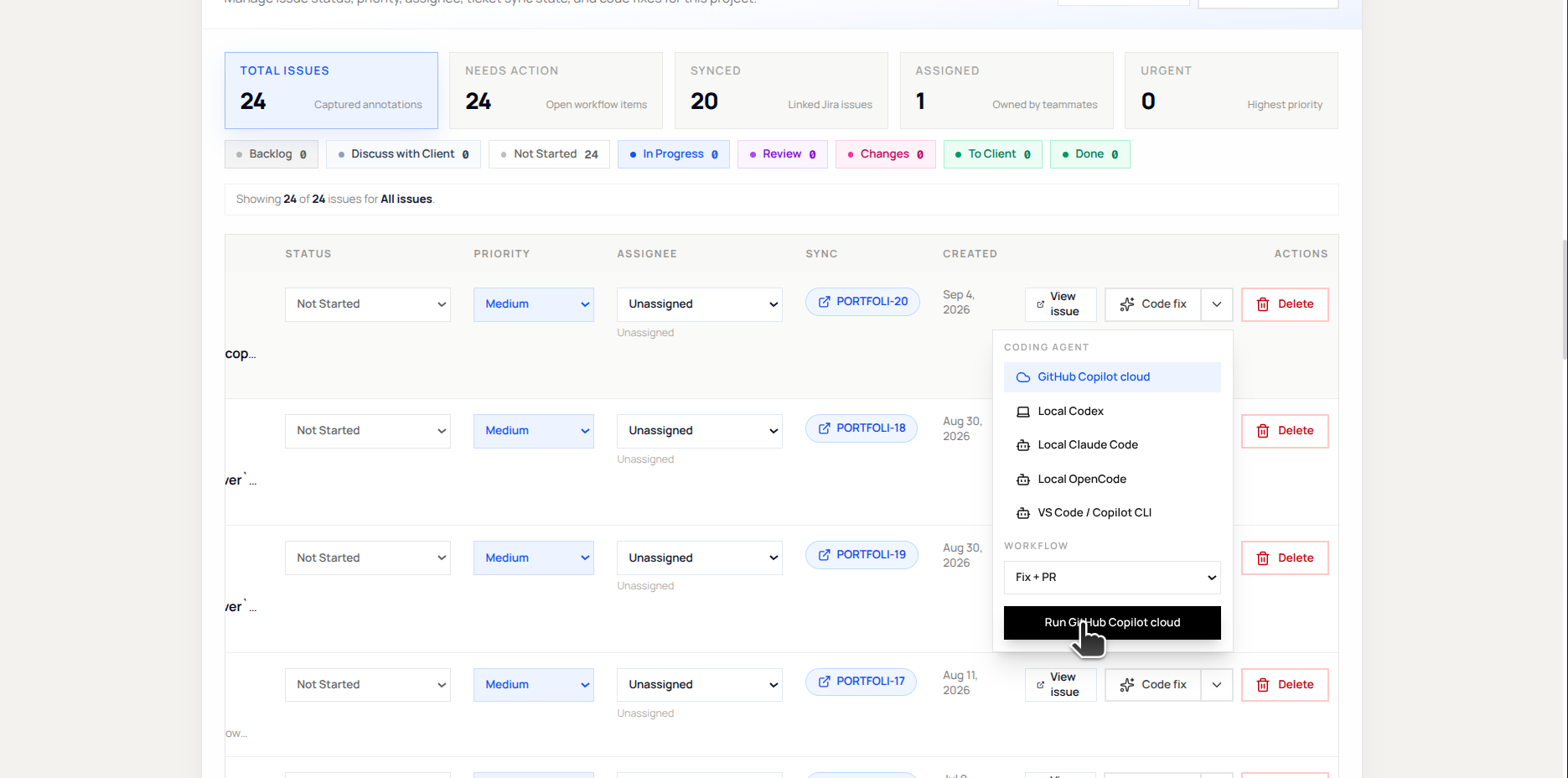
Choosing an AI provider is not only a model comparison. It is a workflow decision. The right setup depends on the type of website work, the repository environment, the guardrails your team needs, and the person accountable for approving the result.
Start with task shape, not provider names
Small, well-bounded work—such as adjusting copy, a component style, or a known bug—may be suited to a focused implementation task. Larger or uncertain work may first need a plan, a design decision, or a human technical assessment.
A good brief helps any provider perform better because it states the user-facing goal and points to the relevant page context. Provider choice cannot compensate for an unclear request.
Define the repository boundary
Before assigning implementation, know which repository, branch, and files are in scope. Treat repository access as a deliberate permission, not a convenience. The provider should work only where the task requires and should not be expected to infer the release strategy.
For local runners, keep local tooling and credentials in the environment that owns them. For cloud workflows, use the access and approval controls appropriate to your organisation.
Require a reviewable output
A useful provider output explains what changed, what assumptions were made, and what should be reviewed. It should be possible for a human to compare the result with the original brief and decide whether it is ready for testing or release.
This is more useful than treating a generated answer as the end of the workflow. The provider contributes implementation; the team retains product and release accountability.
Build the human gate into the normal path
Do not design review as an emergency brake. Decide who checks the proposed change, what evidence they need, and how approval is recorded before assigning the task. That makes the workflow faster because no one has to invent governance after the code exists.
WebAnnotates reflects this sequence: capture, enhance, sync, assign, review, publish.
Put the workflow into practice
Keep website feedback connected to the work it creates.
Capture context on the live page, create a clear brief, sync the task, assign the right provider, and keep a human in the review loop.
Start with WebAnnotatesQuestions
Frequently asked questions
Should AI providers receive the original feedback?
They benefit from the original context alongside a clear brief, especially when a reviewer’s intent could be lost in a summary.
Who is responsible for an AI-generated release?
The people and organisation who review and approve it. AI assistance does not remove human accountability.