
Agencies
A Website Feedback Workflow Agencies Can Share With Clients
Learn how agencies can collect clearer client website feedback, turn it into scoped work, avoid endless email threads, and keep approvals visible.
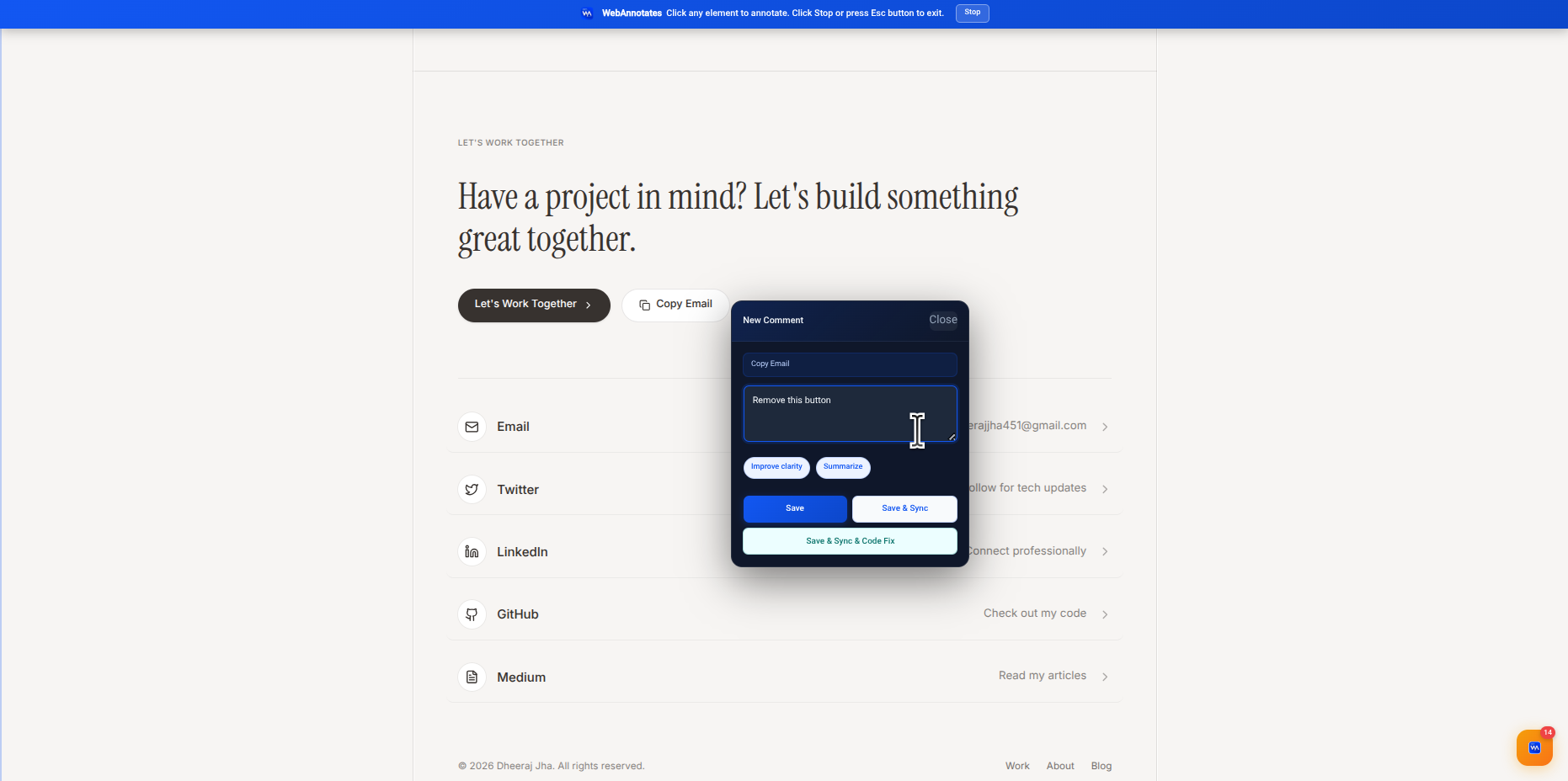
Agencies are often asked to translate a client’s reaction into design, development, and delivery work. That translation becomes expensive when feedback is spread across email, calls, documents, and screenshots. A shared, page-level workflow makes the client’s intent easier to preserve without asking them to learn engineering terminology.
Give clients a simple way to point, not a technical form
Clients are good at recognising what feels wrong or incomplete on their website. Asking them to identify component names, browser states, or CSS selectors creates friction and often reduces the quality of feedback. Let them point to the page element and describe what they are trying to achieve.
The agency can then add the implementation detail, priority, and scope needed for delivery. This keeps the client’s role focused on their expertise: brand, audience, content, and business outcome.
Separate observations from approved scope
Not every comment should become billable work immediately. Label feedback clearly: observation, question, proposed change, approved change, or out-of-scope request. This protects the relationship by making the decision point visible before work starts.
When an item is approved, improve it into a clear brief and sync it to the agency’s project system. The evidence from the original page remains available if the client or delivery team needs to revisit the request.
Make approval a specific, visible event
A client saying “looks good” in an email thread can be difficult to match to a specific change. A review stage that links the proposed result to the original feedback creates a clearer record of acceptance.
That record is useful for launch readiness, retainers, and future iterations. It also reduces the pressure on account managers to reconstruct what was agreed months later.
Use the workflow to improve, not police, collaboration
The purpose of a structured system is not to make clients feel constrained. It is to make it easier for their input to lead to the right outcome. Explain the path in plain language: point to the page, clarify the request, approve the scope, review the change, then publish.
When everyone can see the status of a request, fewer conversations need to be spent asking whether it was received or what happens next.
Put the workflow into practice
Keep website feedback connected to the work it creates.
Capture context on the live page, create a clear brief, sync the task, assign the right provider, and keep a human in the review loop.
Start with WebAnnotatesQuestions
Frequently asked questions
Can clients submit feedback without knowing technical terms?
Yes. The workflow starts with a live-page annotation and a plain-language note; the agency can add technical context later.
How does this help prevent scope creep?
It makes the difference between an observation, a proposed change, and an approved request visible before implementation begins.